
What Should You Know Before Buying Air Chisel Bits About Type & Size?
The air gun, also known as an air hammer(Air
Hammer, Air Chisel), used together with an air chisel, uses compressed air to drive an internal piston,

Compared with an electric concrete chisel(also called an electric hammer chisel or electric chisel), an air hammer is a lighter and more budget-friendly
choice.
In the U.S. market, many automotive technicians use air hammer sets to repair automotive parts as a replacement for a hammer and hand chisel.
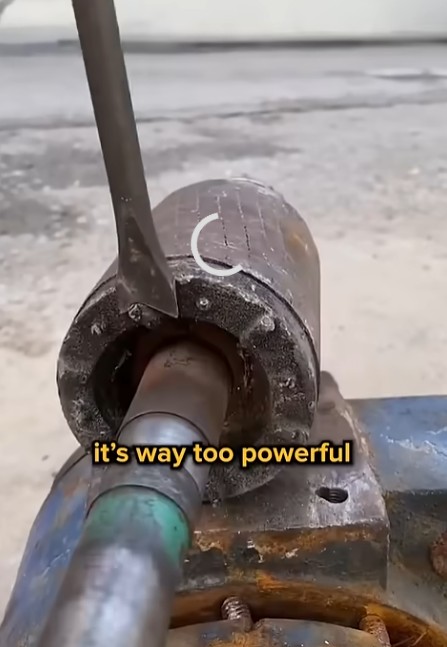
Demo video: how to use an air chisel to deal with seized nuts — Stuck Bolts, Bushes or Nuts?? Air Hammer To The Rescue:
https://www.youtube.com/watch?v=znyI-vSliY0
Tien-I Industrial mainly manufactures air chisels in0.401" and
0.496" two shank-end sizes: round shank sizes (Shank Size) and hex shank sizes (Hex Shank).
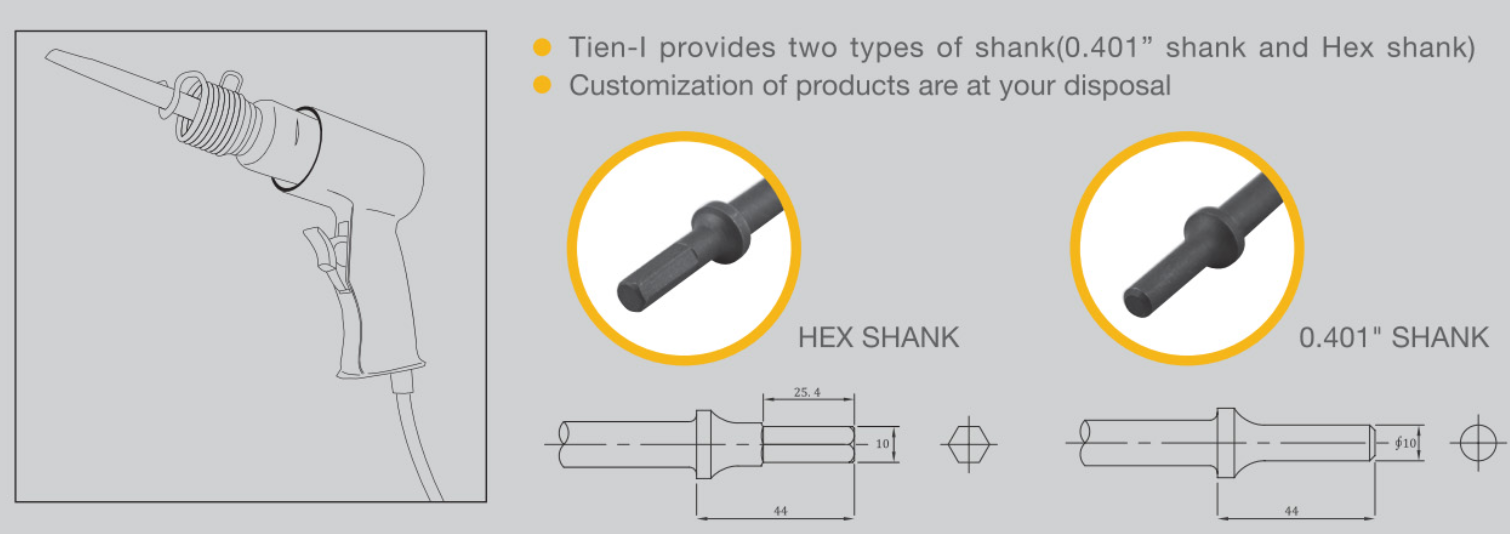
The main reasons for and differences between these two specifications are as follows:
0.401" (Round Shank):This is the most common standard specification,
0.496" (Large Round Shank):Designed specifically for heavy-duty use (Heavy Duty).
When the air hammer is longer and
Please pay special attention to the size of the air hammer you purchase, because it determines the shank-end size of the chisel you need to use. Common air chisel shank-end sizes include:
1.) Round Shank: 0.401" round shank
2.) Hex Shank: 0.401" hex shank. Its purpose is to keep the angle fixed and prevent the chisel from rotating during impact.
It is suitable for cutting that requires precise directional control, such as cutting sheet metal along a specific line.

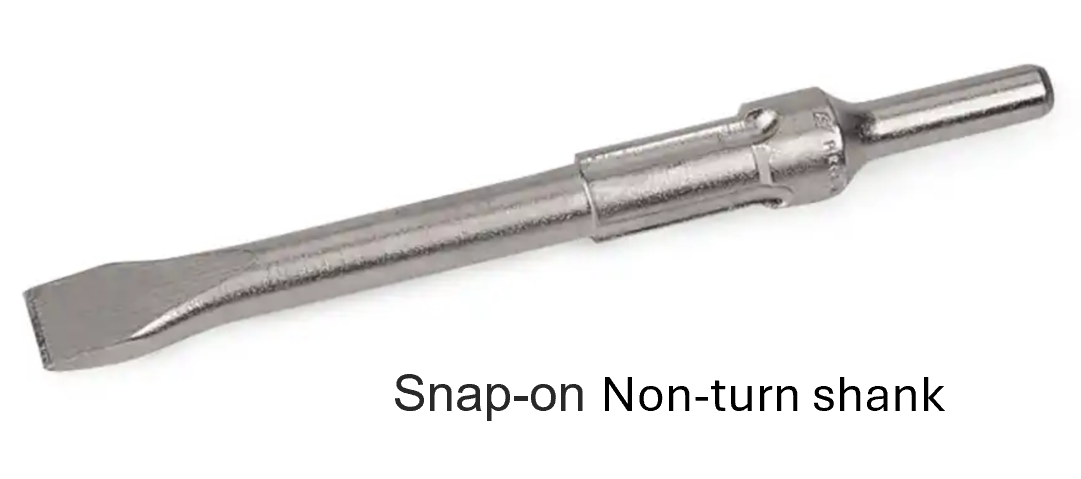
3.) Non Turning Shank: Features specific grooves and must be used with an air hammer quick-change coupler (instead of a traditional retaining spring),
Air chisel durability is an important consideration for many tradespeople. On a jobsite or during auto repair, one of the most frustrating things is having a chisel fail after only a few hits and then having to find a replacement tool.
We also remind users to wear proper safety protective equipment when using an air hammer. Air chisels really can break and cause flying-fragment injuries (anyone who has done RTS testing should know this).
So why have the air chisels Tien-I has produced for more than 20 years been more durable?
The first key point is the patented design at the air-hammer connection end.
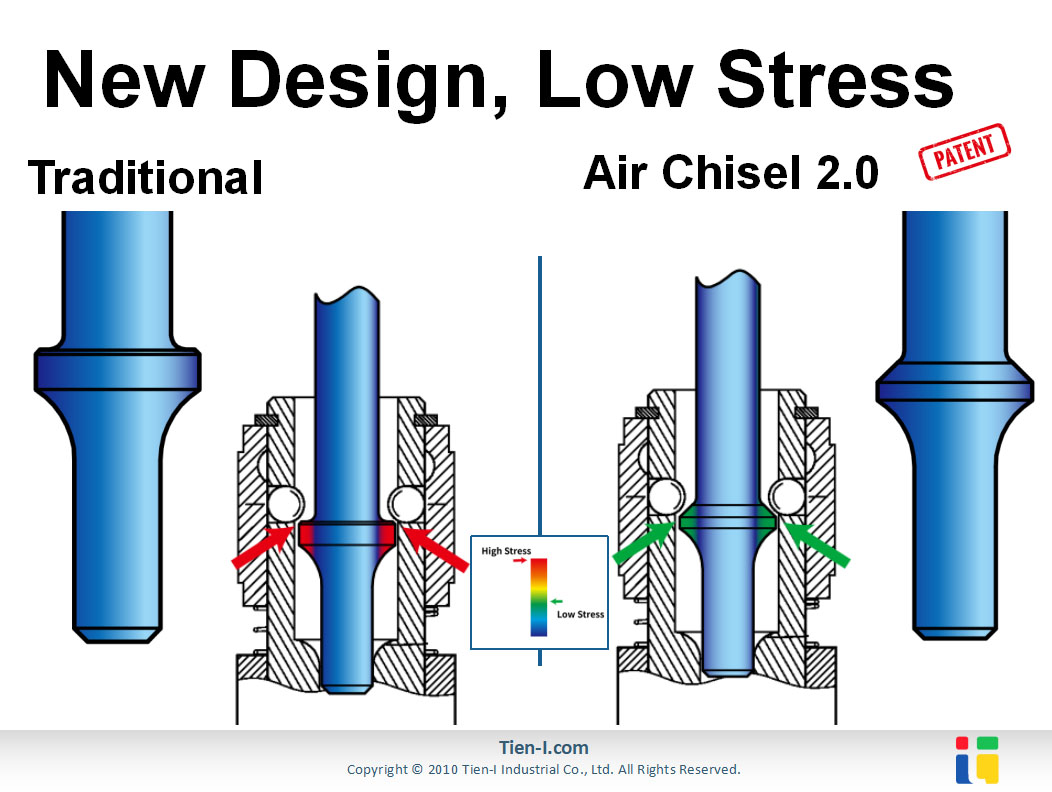
The color contrast in the image shows the stress concentration points caused by metal fatigue.
The neck (Collar) of the chisel has a 90-degree or nearly right-angle design. When the pneumatic tool impacts at high speed,
Traditional designs can create stress concentration. If it breaks here, the chisel can fly out. And then there is no “after that.”
New Design (AirChisel 2.0): 2.0): It uses a sloped, curved profile instead.
In engineering terms, this is Stress Distribution. (BGM: Doraemon theme song)
Although the chisel end (working end) wears down, that is considered “normal wear,”
However, if the connection end breaks,
Finally, there is the workplace safety risk: at the moment of failure, the chisel may be ejected while moving at high speed,
So please, when using an air chisel, wear safety glasses.
You are working to make a living—wearing protective gear is nothing to be embarrassed about.

In addition to the patented design, Tien-I air chisels are made from a specially formulated nickel-chromium-molybdenum alloy steel supplied
by China Steel Corporation (Taiwan).
They are hardened using an EV-industry-grade box-type heat treatment furnace to provide stable wear resistance and high-impact load capacity.
This material is mainly used for impact- and wear-resistant metal parts such as automotive bearings, spindles, gears, and machinery components.
These are the fundamentals of manufacturing. Our goal has not changed for decades: to help professional tradespeople use their chisels every day with confidence and safety.
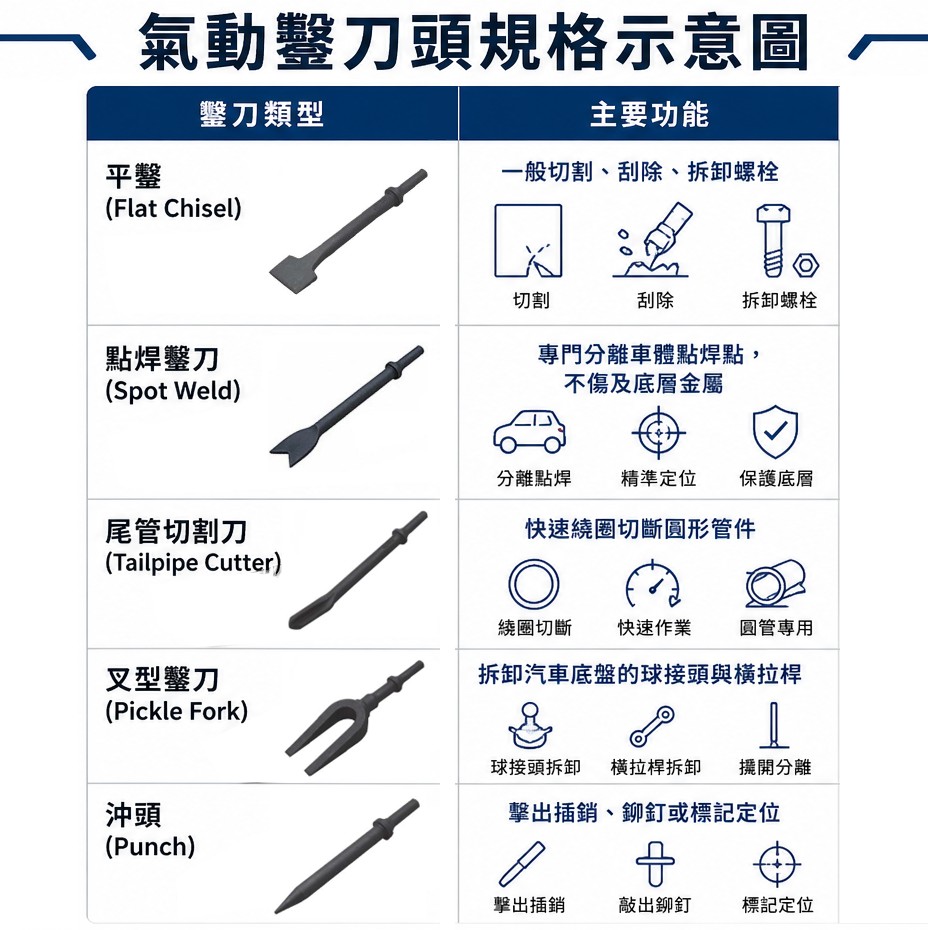
Tien-I also manufactures air chisels with many different head shapes. Common
|
Chisel Type |
Visual Features |
Main Function |
|
Flat Chisel (FlatChisel) |
Flat cutting edge |
General cutting, scraping, and bolt removal |
|
Spot Weld Chisel (Spot Weld) |
Special concave cutting edge |
Designed specifically to separate automotive body spot welds without damaging the underlying metal |
|
Tailpipe Cutter (Tailpipe Cutter) |
Blade with a guide groove |
Quickly cuts around circular tubing |
|
Pickle Fork Chisel (Pickle Fork) |
Looks like a two-prong fork |
Removes ball joints and tie rods from automotive chassis |
|
Punch (Punch) |
Narrow cylindrical tip |
Drives out pins and rivets, or creates positioning marks |
For actual air chisel applications, refer to this YouTube demonstration of this type of tool.
In addition to the chisel heads listed above,
Feel free to contact our professional sales team.